


Emotional Intelligence: Your Secret Weapon for Leadership and Growth

What Is Emotional Intelligence?
Emotional Intelligence (EI) is your ability to recognize, understand, and manage emotions - both yours and others. It’s not about ignoring feelings; it’s about using them wisely. Key components include:
Self-awareness: Know your emotions and their impact
Self-regulation: Stay calm under pressure
Motivation: Drive yourself beyond external rewards
Empathy: Understand others’ perspectives
Social skills: Build strong relationships
Example: A manager notices a team member showing signs of stress - short responses, missed deadlines. Instead of pushing harder, the manager adjusts workload and offers support. Result? The employee feels valued and performs better.

Emotional Intelligence in Leadership
Great leaders aren’t just smart - they’re emotionally intelligent. Why? Because leadership is about people, not just processes. Leaders with high EI -
Inspire trust and loyalty
Navigate conflicts with grace
Motivate teams through empathy and clear communication.
Example: During a tense meeting, a leader senses frustration building. They pause, acknowledge concerns, and invite open discussion. The tone shifts from conflict to collaboration, and the team leaves with actionable solutions.

Emotional Intelligence for Developing People
EI isn’t just about managing teams - it’s about growing them. Leaders who use EI to develop people create high-performing, loyal teams. Here’s how-
Spotting potential beyond metrics
Coaching with empathy instead of criticism
Building confidence by acknowledging emotions.
Example: A team member struggles with deadlines. Instead of reprimanding, an EI-driven leader asks, ‘What’s blocking you?’ The employee reveals they’re overwhelmed by a new tool. The leader arranges training and checks in regularly. Result? The employee not only meets deadlines but becomes a go-to expert for that tool.
Emotional Intelligence: Developing Strong “People Skills”
Technical skills open doors, but people skills keep them open. EI helps you-
Listen actively instead of waiting to speak
Read non-verbal cues like tone and body language
Build rapport beyond transactions.
Example: Two colleagues misunderstand each other over email. One uses active listening during a follow-up chat, clarifies intent, and restores trust - preventing a potential conflict.
Emotional Intelligence: EQ or EI?
You’ve probably heard EQ - short for Emotional Quotient. It’s often used interchangeably with EI, but here’s the nuance-
EI = Skill (ability to manage emotions)
EQ = Score (measurement of EI)
Example: A company uses EQ assessments during hiring to identify candidates who can thrive in collaborative environments—ensuring cultural fit and reducing turnover.

Are There Downsides to Emotional Intelligence?
Yes - too much EI can backfire. Over-empathizing might lead to indecision or burnout. Being overly attuned to others’ emotions can make you avoid tough conversations.
Example: A manager delays giving critical feedback for fear of hurting feelings. The issue worsens, impacting team performance.
Balance is key: EI should empower you, not overwhelm you.
Can I Boost My Emotional Intelligence? How?
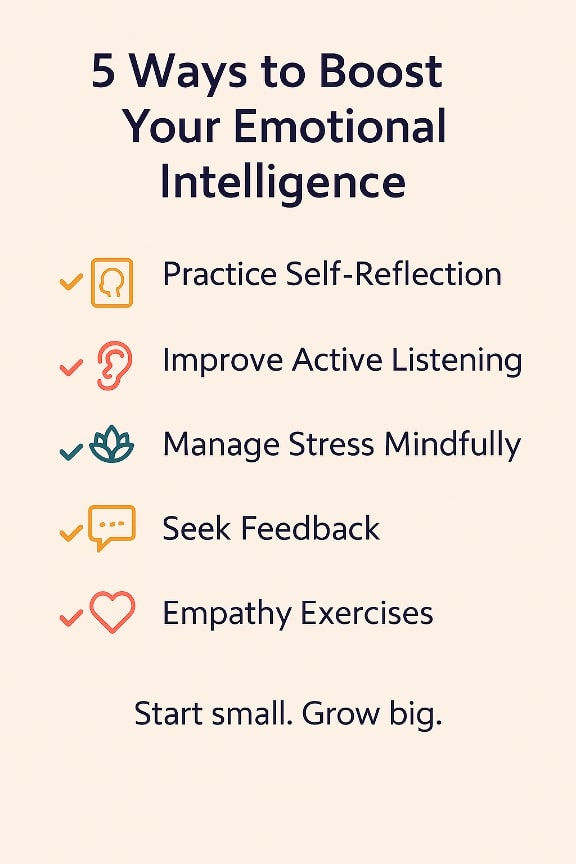
Absolutely! EI isn’t fixed - it’s a skill you can develop. Try-
Practice self-reflection
Improve active listening
Manage stress mindfully
Seek feedback
Empathy exercises
Example: During a team-building session, employees practice empathy exercises by sharing personal challenges and listening without judgment - strengthening trust and collaboration.


Good article thanks for Sharing.
Thanks
Ajit Bhasme
This is brilliant, Deepak! Leadership is about people, not just processes and results...Loved it ! Somewhere in getting results, we are not striking right balance.
Absolutely brilliant advice Deepak, this sounds like an essential skill to build a strong team.
Nice one Deepak! I really like the difference between EI and EQ... Was aware about a quantitative measure of EQ, but EI is eye opening and I completely agree on self reflection, empathy & stress management as key!
Not many practice EI these days and striking the right balance is the key.
Nicely articulated, Deepak!